How will agentic AI change online payments?
It’s unclear who’s liable if it over‑orders or pays the wrong merchant.
DBS Bank Ltd., Visa Worldwide Pte. Ltd., and Mastercard, Inc. are testing agentic artificial intelligence (AI) to make online shopping and payments more hands-free, but analysts said compliance and liability challenges could slow adoption.
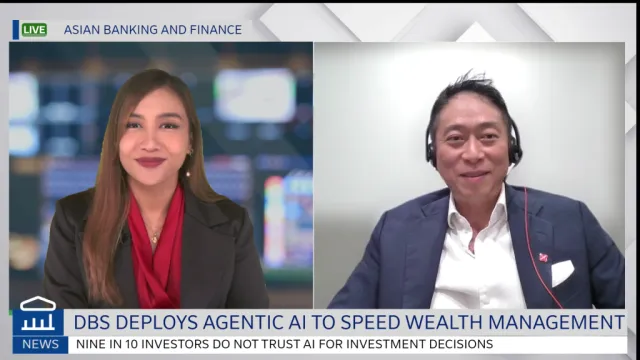
Singapore-based DBS Bank said in February it is piloting agent-initiated payments with Visa, letting AI handle tasks from browsing to checkout and final payment.
Alipay Payment Technology Co. Ltd. reported that its agentic solution, AI Pay, processed more than 120 million transactions in the week of February 5-11, 2026. Customers of Luckin Coffee, Inc. can order and pay entirely through conversations with the "Lucky AI" assistant, Alipay said.
Unlike traditional or generative AI, agentic AI can plan, set goals, adapt, and act autonomously with minimal human input. Mastercard executives said this could change commerce, letting AI agents initiate transactions on consumers’ behalf. The potential to completely transform the way commerce is conducted is huge, said Craig Vosburg, Mastercard’s chief services officer, speaking at the Singapore Fintech Festival in November 2025.
Potential use cases extend beyond payments. Amazon Web Services, Inc. cited marketing, fraud prevention, cross-border foreign-exchange trading, and liquidity management as areas where agentic AI could learn regulations and optimise operations.
But implementing secure, compliant payments is challenging. Integration with existing tokenisation systems and compliance with data security standards of the Payment Card Industry is needed to manage fraud and authorisation risks, Amazon said.
UK law firm Pinsent Masons LLP said compliance and user experience are critical. “Poorly designed consent journeys will lead to failed payments, abandoned carts, and potential regulatory exposure,” Pinsent Senior Associate David Tilbury said in an online post on 18 February.
Agentic AI introduces a new layer of complexity for liability, he pointed out. Traditionally, responsibility falls amongst consumers, payment service providers, and merchants.
“At the moment, there is no guidance on allocation of liability for when an AI agent is involved,” Tilbury said. “It is unclear who would be responsible if an [AI] agent over‑orders, pays the wrong merchant, or misinterprets a consumer instruction.”
Questions to ponder:
- How can agentic AI integrate with existing payment infrastructure without creating security gaps?
- How are banks testing error handling—wrong amounts, duplicate payments, or misinterpreted instructions?
















 Read Here
 Advertise
 Sign Up