UOB logs ‘highest’ Copilot usage amidst 40-branch rollout
Specialised digital assistants now manage product inquiries across Singapore.
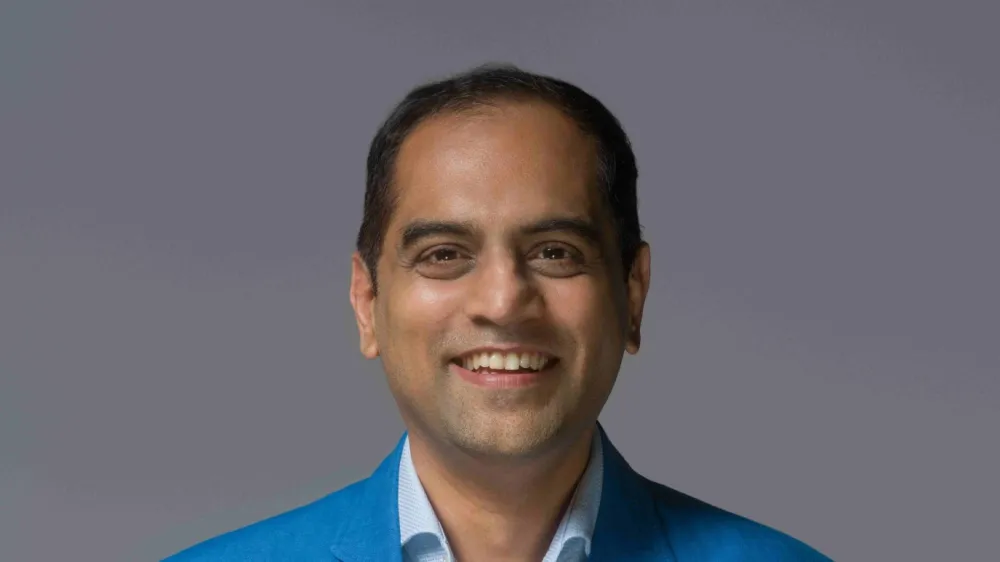
United Overseas Bank (UOB) has formed a dedicated team with the goal of using emerging technologies to open up employees’ time to do “higher value work” for the bank.
The Singapore-based bank has a pipeline of projects over the next few months and years. Recently, it adopted Copilot, Microsoft’s artificial intelligence (AI)-powered virtual assistant, for use by its 32,000 employees.
Over 20,000 employees are being trained to use Copilot in their daily work, Lee Zhu Kuang, Head of the Innovation Group at UOB, told Asian Banking & Finance in an interview during the Singapore Fintech Festival 2025 held in November.
“We are one of the highest Copilot users according to Microsoft," Lee said, adding that the bank’s employees send millions of prompts on a daily basis.
UOB’s Innovation Group also has a platform for businesses to build their own bots. Under this platform, the group will work with a business’ tech and operations team to create bots that automate various processes.
“For example, recently we have launched the Singapore branch bots, which we have rolled out to more than 40 branches by the end of the year. This is to help them answer queries from customers on the spot about our products and services,” Lee said.
UOB now also has similar bots for its HR and other banking businesses. The bots enable users to find out more about UOB’s policies and internal practices and processes, for example.
“We have rolled out around eight of these bots, and there’s another five to be completed by the end of [2025],” Lee said. UOB has another 12 bots planned for 2026.
Formed in April 2025, the Innovation Group at UOB is made up of what Lee calls “innovation specialists and emerging technology specialists.”
One of its mandates is to bring up the digital literacy of the bank’s employees, and to create initiatives that uplift the productivity of the bank using the latest technology.
The group works with various teams within UOB in various use cases. “Normally we have a use case. We work together with the business line to define a use case, and we work with [group technology & operations] (GTO), which is our technology operation arm,” Lee said. They also work with the channel product team to look at what is required to bring a use case to fruition.
Lee and UOB define innovation as the creation of new value. “Innovation is the creation of new value. When we think about innovation in UOB, it’s innovation with purpose, it’s innovation with sustaining growth,” he said.
He stressed that governance is an important aspect of innovation and helps UOB ensure that their innovation is sustainable.
UOB merges this with its ASEAN-first strategy to remain globally relevant. “For UOB, we are actually looking at orchestrating services at the moment of demand that is required by the client across an embedded ecosystem that allows us to respond very quickly to clients,” Lee said.
This will enable UOB To differentiate from competitors on a service-level perspective, he added.
UOB is also looking at governance and sustainability to guide its innovation. This is to make sure that their innovation can be measured in terms of the benefit of the business and the ecosystem, Lee said.
Looking ahead, UOB plans to continue scaling emerging technologies, especially AI, to future-proof its data infrastructures and blockchain technology.
“At the same time, we are going to invest more in training our employees to make sure that they are comfortable using the latest technology. As a bank, UOB needs to heavily rely on our people and we need to make sure that we reskill them and upskill them to augment them with the technology that’s required,” Lee concluded.













 Read Here
 Advertise
 Sign Up