Thailand backs major conglomerates for digital banks but risks stifling innovation
By Frances GaguaDid the Bank of Thailand play it too safe by going for large, established conglomerates?
Thailand's financial landscape is set for a dramatic shape-up in 2026 with the entrance of digital-only banks. In July, the Bank of Thailand (BOT) granted three digital banking licenses, choosing consortiums that combine local conglomerate strength with established foreign expertise.
All the consortiums are expected to take advantage of their parent companies' strengths—but how much this will help them scale their businesses is the question. The choice of three well-known consortiums is certainly a safe play for the BOT and will imbue these new digital banks with trust and stability, but it does raise the question of whether the BOT played it too safe and potentially stifled innovation.
Below is a look at each of the three consortia and what their strategies might look like.
E-wallet dominance and convenience store tie-ups
Perhaps the most exciting digital bank is the one backed by ACM Holding Co., which operates TrueMoney, the largest e-wallet in the country. With a 53% market share and 17 million active users, it holds a scale that surpasses even established local banks that have 50-100 years of history.
Added to that is its connection to the Charoen Pokphand (CP) Group, Thailand's largest privately-owned business, whose subsidiary CP ALL holds the license to 7-Eleven in Thailand. Thai people may just find that the over 15,430 7-Eleven stores across the country transform into banking hubs.
The digital bank may even offer services aimed at business owners and suppliers. CP Group owns a controlling stake in Charoen Pokphand Foods (CPF), one of the world's largest producers of feed, shrimp, poultry, pork, and other agricultural products, based on 2024 data from Market Research Reports.
Established brands
The digital bank being built by China's WeTechnology Limited, South Korea's Kakaobank Corp, and Siam Commercial Bank (SCB) brings together the history and proven expertise of two established digital bank brands and Thailand's oldest bank. WeTechnology Limited is owned by WeBank, the leading digital bank in China, whilst Kakaobank is the biggest digital bank in South Korea. Both digital banks have been profitable for over five years. SCB, meanwhile, is the oldest bank in Thailand, backed by decades of data and a brand recognised by virtually every local.
But this digital bank won't have the same advantage as WeBank and Kakaobank. Both launched with direct integration into their countries' messaging apps: WeChat in China and KakaoTalk in South Korea. In Thailand, the biggest messaging app is LINE, used by over 80% of internet users.
One strength they may have is in cross-border banking services. The new digital bank might take advantage of WeBank and Kakaobank to set up a payment ecosystem enabling Thai visitors going to China and South Korea to have an easier time paying there. What unique features and identity they will roll-out is something to look forward to.
Gas stations as bank branches?
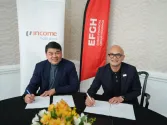
The final consortium combines old-school touchpoints and has the advantage of being tied to Thailand's biggest state-owned conglomerate. Krungthai Bank (KTB) teamed up with PTT Oil and Retail Business Public Company Limited (PTT Oil) and Advanced Info Service to set-up Clicx Bank Public Company Limited (VBCo).
Clicx Bank may take advantage of PTT Oil's network of 2,200 gasoline stations across Thailand. They may offer rewards points and discounts when refilling tanks or may even transform gas stations into hybrid bank branches where people can deposit and withdraw money.
A question of innovation
Thailand's central bank did its research: it chose consortiums with companies that have a history of digital bank success overseas (WeBank, Kakaobank), are backed by its largest conglomerates (PTT Oil, CP Group), or come from established financial brands (Siam Commercial Bank, Krungthai Bank, TrueMoney).
Therein lies the problem: all three consortiums feature established financial brands and the country's largest conglomerates.
Compare this with Singapore, which has MariBank backed by e-commerce giant Shopee and GXS Bank backed by ride-hailing and delivery app Grab. Both companies emerged in the 2010s; the youngest company in Thailand's successful digital bank licensees is TrueMoney, established in 2003.
The leader of Singapore's digital banks did end up becoming Trust Bank, backed by Standard Chartered—but there was no doubt that its mix of players had led to new ways of saving. These include e-commerce-tied cashback cards and coins cashback for their phone bills, for example.
Thailand, meanwhile, may have played it too safe. Time will tell if the digital banks operate with just the same recycled rewards products that incumbents are already capable of offering, or if they will offer new ways of spending and money saving for the Thai population.











 Read Here
 Advertise
 Sign Up