News
Agricultural Bank of China's February loans top rivals
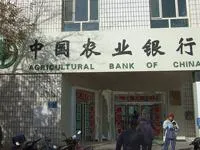
Agricultural Bank of China's February loans top rivals
Lender was able to lend 28% of China's top four banks total amount.
Industrial Bank loan growth cut by half

China's tightening trims down lending to $125bln as bank aims keeping bad loan ratio below 0.58%.
China Merchants seeks approval to open Taiwan office

Improving China-Taiwan relations enabled lender to apply for presence in the hometown of its Taiwanese clients.
Deutsche Bank Malaysia secures international Islamic banking license

Bank Negara Malaysia allowed Asia to have better access on lender's global Islamic banking platform.
China Merchants eyes raising $3.2bln via rights issue

Move aimed to replenish capital ratio after expansion of loans and acquisition of Wing Lung.
HSBC to join Bank of Communications' rights issue

HSBC sees BoCom's fundraising move as opportunity to add its 20% stake and increase China investments.
Woori set to be privatised in 2010

Government intends to complete lender's privatisation to maximise company value amid above 300% profit growth performance.
Fitch: Taiwanese banks to see modest improvements in 2010

Fitch Ratings expects Taiwanese banks to generate slightly better earnings in 2010 as they benefit from the modest global economic recovery.
HSBC pre-tax profits down 23.9% to US$7,079 million
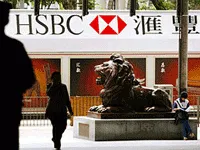
Group Chairman Stephen Green says the decrease is part due to the reversal of fair value accounting gains on the bank's own debt.
ANZ declines AMP's US$3.6bln stake sale offer

Bank preferred to focus on integrating ING and ‘organic growth’.
China banks' loans to foreign shipbuilders surge
Lending increased by more than 10% as banks follow government’s initiative to revitalise shipbuilding industry.
Bank Danamon 2009 net unchanged at $165.24mln

Lender’s CAR topped 20.7% as its equity grew 49% despite flat profit performance.
Maybank eyes 60% debit card transactions growth

71% jump in debit billings over past 6 months encouraged lender to target $733mln transactions.
Hong Leong Q2 profit down 13% at $66mln

Lender is upbeat Malaysia's economic recovery in second half of 2010 would provide it growth opportunities.
Celent publishes Cash Management in China report

Hua Zhang examined the rapidly developing cash management market China and trends in cash management services.
SBI plans raising $4.3bln through rights issue

Amount will be added to lender's target of $10.8bln to satisfy India's growing loans demand.
Maybank Singapore offers equity-linked structured deposit

Blue Skies Structured Deposit's US$7,094 minimum initial investment can yield maturity payout of 10%.
Thought Leadership Centre



Most Read
1. Asia’s banking elite celebrated at Asian Banking & Finance Awards 2026 2. Digital banks bet on AI to unlock outsized ROI 3. Human oversight remains central as insurers adopt agentic AI: valantic 4. Travel trends reshape banks' payment strategies: Euromonitor 5. Citi expands AI rollout to IndonesiaResource Center

 Read Here
 Advertise
 Sign Up
Event News

Banks can respond by moving toward a hybrid advisory model.














Commentary
How alternative data lending is reaching Southeast Asia's unscored MSMEs
Asia is leading payments modernisation and banks can't afford to fall behind
Investing in an inefficient market
Platinum cards, paper-thin compliance?
Energy price volatility highlights structural gaps for managing FX risk in APAC
Asia’s electronic markets reach an inflection point of transformation