From teller to group cash head: Tesy Mathew charts DBS’s cash evolution
Treasurers need better cash visibility as payments accelerate.
For all the changes sweeping global finance—from instant payments to artificial intelligence—the core job of corporate cash management has remained the same: making sure companies have money where and when they need it.
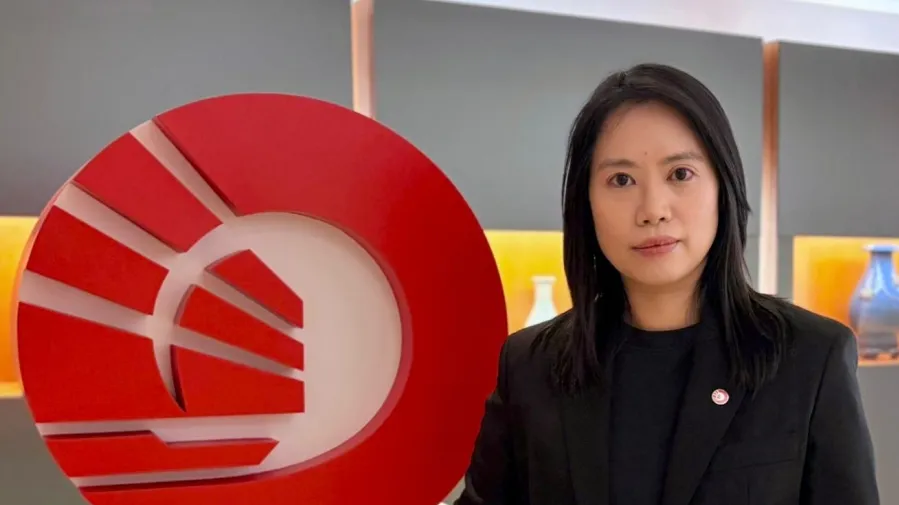
That task has become harder as payments move faster and companies operate across more markets, Tesy Mathew, managing director and group head of cash product management at DBS Bank Ltd., told Asian Banking & Finance.
What has changed is the speed and complexity of global finance. Many companies now operate across multiple countries, with payments moving in real time and trade flows shifting rapidly. That leaves corporate treasurers under pressure to track liquidity and avoid sudden funding gaps.
“We have many corporate clients who are not just based in one location, but across multiple locations,” Mathew said in a video call. “Treasurers need liquidity and visibility. They don’t want any surprises when it comes to cash.”
“Making sure cash is available when it is required, where it is required, at the right time. That is what customers are expecting,” Mathew said.
Her team works with companies to monitor cash positions across regions and ensure they can move funds quickly between markets when needed.
The challenge, she said, is growing as payment systems multiply and businesses adopt digital tools.
As group head of cash product management at DBS, Mathew oversees teams that design and develop solutions for businesses to manage their payments, collections, liquidity and cash positions. The role requires balancing customer needs, regulatory rules and emerging technologies.
“It’s really a 360-degree view of everything,” she said, noting that one has to understand what clients need today, what they will need tomorrow, what regulators expect, and what technology is coming.
Amongst the developments banks are studying most closely is tokenisation—the process of representing financial assets digitally on blockchain-based systems.
DBS has introduced tokenised deposits, which allows companies to move funds instantly across different markets whilst keeping tighter control of their liquidity, she said.
Real-time and embedded payments are also expected to spread across more international corridors.
Whilst many banks already support instant payments in certain countries, Mathew said the next stage would be linking more of these systems across borders.
“At the moment, most banks cover only certain locations,” she said. “But we do see this becoming more pervasive across corridors.”
Faster payments and expanding trade routes also introduce fresh risks. Currency volatility remains a major concern for companies operating globally, particularly during periods of geopolitical tension.
“How do you help customers when some things are not in their control—for example what happens overnight in the US?” Mathew asked, referring to sudden moves in global markets that could affect exchange rates and funding costs.
From teller to group cash head
Mathew’s own career in banking began by chance. Originally from India, she moved to Singapore in 1998 to study at the National University of Singapore.
Towards the tail end of her studies in 2002, she worked as a bank teller for three months at the Jurong branch of Post Office Savings Bank (POSB), which DBS acquired in 1998.
“It wasn’t really planned, but because the economy was in such a [bad] state, I thought getting an internship would help, and it really did.” At the time, Singapore’s economy was just emerging from its worst recession since its independence, contracting 2% in 2001 from a 10% growth a year earlier.
After graduating, she joined DBS’s consumer banking division before moving into transaction banking, where she has spent much of her career.
One of her early assignments involved Singapore’s cheque truncation system, which allows cheque images to be processed electronically. The technology reduced the need to physically transport cheques between banks. More than two decades later, Singapore is preparing to phase out physical cheques entirely by 2027.
The banking industry has also changed in other ways, particularly in how it supports working parents and women in leadership roles.
When she had her children, maternity leave was three months, Mathew said. Today, there are flexible work arrangements that include letting new parents fully work from home for up to six months.
Banks have also introduced programmes aimed at developing female leaders. DBS launched a women’s leadership programme in 2023 and runs “Lean In Circles,” small peer groups where employees support one another in achieving personal and professional goals.
Mathew is a member of the Singapore Management Committee, which she credits to various opportunities given by DBS to support bankers and women.
“Singapore is the mother brand for DBS So, being in the Singapore Management Committee, you have the opportunity to influence how the franchise operates in Singapore," Mathew said, noting that the bank has different councils, the employee councils that consider learning and the development. These include establishing leadership programmes, a management associate programme, and mentorship programmes.
"These are the opportunities that is given for me to be more front-footed and really pay it forward. So that was one of the reasons I wanted to be in the SGMC," Mathew said.
She is also a mentor under the Bankers' Association for Finance and Trade (BAFT) programme.
“The other aspect, of course, is being involved in some of these industry networks or industry organisations where mentorship happens, both officially as well as unofficially. Some of these are women in payments, where they run their mentor programmes and there are symposiums that happens in Singapore and across the world. And then what I have just started is as a mentor in the BAFT programme," Mathew said.
Senior representation has improved as well. DBS recently appointed Tan Su Shan as CEO, one of the few women leading a major Asian bank.
For younger bankers entering the industry, Mathew said long-term planning remains critical—even as finance itself continues to evolve.
“Think about where you want to be in two or three years,” she said. “Plan out your career in terms of what you want to do and where you want to be.”












 Read Here
 Advertise
 Sign Up