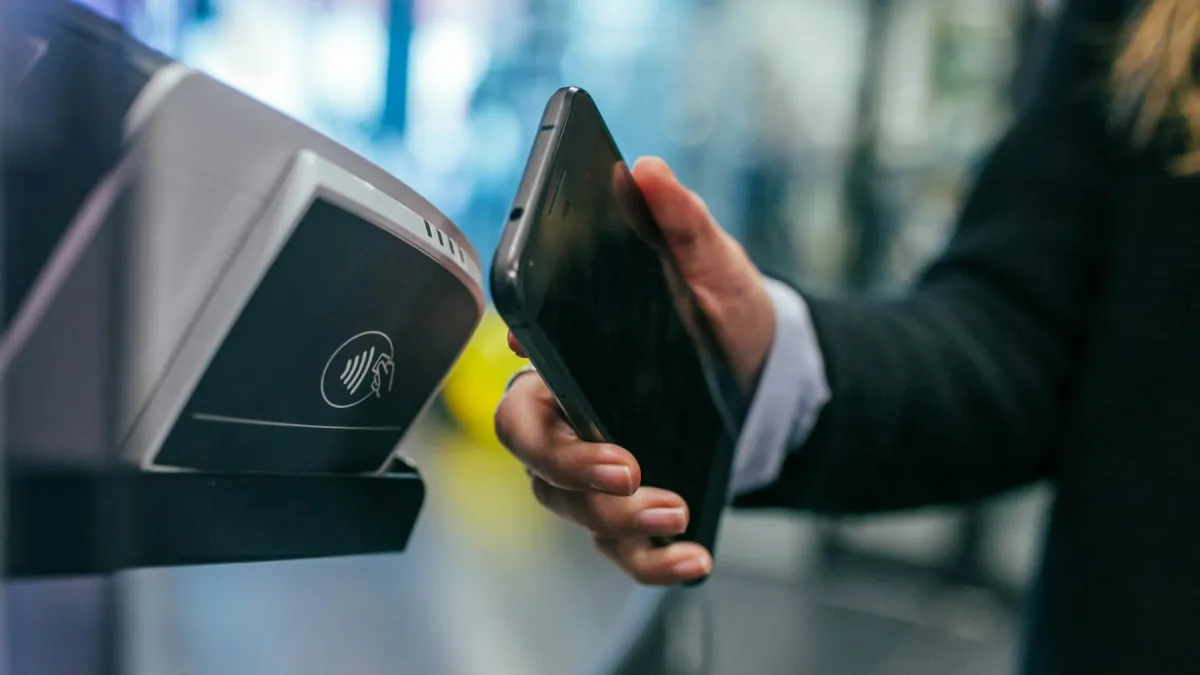
Digital wallets, agentic AI to speed up payments
The focus is on agentic systems that can act on behalf of users.
Paying for goods and moving money across borders could become faster and more automated in 2026, as artificial intelligence (AI) handles checkouts and digital wallets link more closely across countries, analysts said.
AI is expected to remain central to payments innovation, but industry players said the focus would shift from generative tools to agentic systems that can act on behalf of users.
“Powered by artificial intelligence, digital wallets and payment systems will not only streamline how people pay but also develop a nuanced understanding of user intent and preferences, transforming payments into a more intelligent, efficient, and deeply user-centric experience,” Wenhui Yang, CEO at TenPay Global (Singapore), said in an emailed reply to questions.
Banks are also deploying AI to strengthen fraud controls. “AI tools have enabled us to detect two to four times more potential financial crimes while reducing false positives by 60%,” said Manoj Dugar, head of global payments solutions, Asia ex Greater China at HSBC.
He added that broader AI use is reducing time spent onboarding clients, uploading documents, and responding to client requests.
Here are five trends expected to shape payments in 2026.
Trend #1: Agentic commerce takes centre stage
Agentic AI-driven commerce is expected to gain ground, with AI agents helping customers search, select, check out, and complete payments, said Sandeep Malhotra, executive vice president, core payments at Mastercard Asia/Pacific Pte. Ltd.
“AI is shifting commerce from reactive to proactive, with trusted agents able to initiate transactions on behalf of consumers,” he said in an emailed reply to questions.
He said Mastercard’s Agent Pay service lets customers check out through an AI chat interface without being redirected to another site.
Yang said smarter wallets could also enable automatic price comparisons, personalised recommendations, and smoother cross-border payments.
Trend #2: More connected digital wallets
Digital wallets worldwide are expected to become more interconnected through major payment providers and government-backed rails, Yang said.
TenPay Global anticipates deeper interoperability between Weixin Pay and overseas wallets via China’s expanded cross-border interconnection payment gateway and partnerships.
China expanded its gateway in 2025 to onboard foreign e-wallets, including PayPal, GrabPay, and ShopeePay.
Dugar said the industry should collaborate to narrow the gap between domestic and cross-border payment speeds, noting that real-time networks have reshaped expectations for immediacy.
Trend #3: Corporate banking transforms finance
Corporate banking and enterprise resource planning systems are converging, said Andrea Baronchelli, CEO and co-founder of Aspire.
“Businesses will favour more integrated, software-driven financial platforms,” he told Asian Banking & Finance via email. “While this category is still emerging, scale, compliance, and deep integration will play a significant role.”
Barnochelli said that Aspire is operating at the intersection of two large shifts: the convergence of corporate banking and ERP software, and the growing influence of AI and digital money on how financial systems are built.
"Together, these forces are giving rise to a new category of platforms that integrate payments, treasury, and financial operations into a single operating layer for businesses," he said.
Adoption of ERP systems is more common amongst large companies, Dugar said. HSBC’s Tokenised Deposit Service supports cross-border payments through blockchain-based infrastructure, enabling 24/7 real-time settlement.
Dugar said 2026 is likely to focus on building practical use cases for tokenised deposits following pilot launches and proofs of concept.
Trend #4: Stablecoins to reduce friction
Stablecoin adoption is expected to accelerate, particularly for cross-border payments. Over time, usage could offer “card-like simplicity” across multiple payment methods, Baronchelli said.
He said early momentum is likely in areas where traditional systems create friction, such as international transfers, treasury management, and supplier payments.
Although adoption among businesses remains early, stablecoins offer near-instant settlement, programmability, and 24/7 availability compared with traditional fiat money constrained by banking hours.
Trend #5: Tokenisation goes mainstream
Tokenisation is expected to move fully into the mainstream this year, replacing card numbers and passwords with digital tokens, Malhotra said.
He noted that approval rates have risen by as much as 6% where tokenisation is live, unlocking more than $2b in merchant sales globally each month.
Mastercard aims to make digital payments number-free and password-free as early as 2027, targeting full tokenisation in Singapore, Malaysia, and Vietnam next year.
In corporate payments, tokenisation and digital money are also expected to gain momentum.
Dugar said an HSBC survey showed tokenisation adoption among corporate treasuries could increase sixfold over the next two years.


















 Read Here
 Advertise
 Sign Up