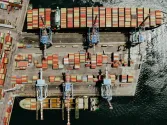
APAC banks face additional $180b losses as oil shock hits credit
Currently, Middle East exposures are low and indirect exposures are manageable, said S&P.
The APAC banking sector could see their credit losses rise by about $180b as indirect risks from the Middle East conflict start to bite, warned S&P Global Ratings.
If oil prices climb and supply chains deteriorate, cumulative biennial credit losses could reach US$910b over 2026 and 2027, compared with US$730b in S&P’s current base case.
S&P’s base case scenario sees the impact of the war on banks as “more muted.” Direct exposures of banks to the Middle East are low, and indirect exposures are manageable, it said.
Financial institutions are expected to outsize exposures to vulnerable corporate sectors such as airlines, energy, chemicals, and transportation could be more adversely affected.
In a downside scenario, the increase in credit losses to total loans in Vietnam, Indonesia, and India would be more pronounced.
"Banks are more likely to be hurt by secondary impacts on the household, corporate, and government sector in a downside scenario," said S&P Global Ratings credit analyst Gavin Gunning.
“This would occur if the effect of the war on economic and credit conditions is much worse or longer than our base envisages,” Gunning added.
Even under a downside scenario, bank buffers will offer resilience, S&P said.
Of the more than 400 financial institutions in Asia-Pacific we rate, 92% are on stable outlook.
S&P expects Brent crude oil to peak at $200/barrel in April, averaging $185/barrel in the second quarter of 2026.

















 Read Here
 Advertise
 Sign Up