HitPay eyes bigger share of traveller payments via QR
Borderless QR lets tourists pay in home wallets with local settlement.
HitPay Payment Solutions Pte. Ltd. is targeting a bigger share of tourist payments by letting small businesses accept foreign digital wallets through Singapore’s unified QR (quick-response) framework.
A solid infrastructure alone does not guarantee merchant adoption, HitPay CEO and co-founder Aditya Haripurkar told Asian Banking & Finance.
“Directionally, we believe digital capture of off-mall tourist spending can move from a relatively low base today to a meaningful minority by 2028 in the markets where HitPay is already strong,” he said in an emailed reply to questions.
Small merchants often struggle to accept overseas payment methods without adding friction at checkout, particularly in food and beverage and retail, where cash remains common.
Haripurkar said the issue is not demand, but the lack of simple and consistent payment acceptance.
HitPay, which operates in Singapore, Malaysia, and the Philippines, launched Borderless QR in January to address this gap.
The system lets merchants generate QR codes that accept payments from tourists using their home digital wallets, with funds converted at mid-market exchange rates and settled in local currency the next day.
The company said the product could be activated through a software update without additional hardware, lowering adoption barriers for small businesses.
“Over the next three years, we expect ASEAN (Association of Southeast Asian Nations) wallets to remain the core foundation of Borderless QR volume,” Haripurkar said. “That is a natural outcome of geography, travel patterns, and behaviour.”
Non-ASEAN Asian wallets, including those from China and India, are expected to drive higher-value transactions, particularly in lifestyle, wellness, and retail segments.
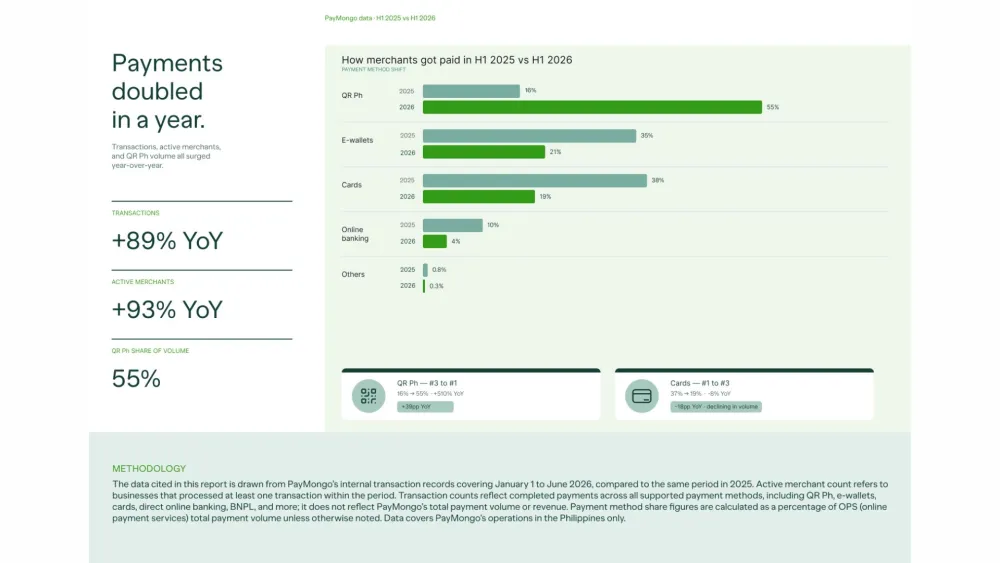
HitPay said transactions doubled year on year in 2025, whilst delivering more than $10m in savings to merchants. Noncard payment volumes have surged 124 times since 2020.
Southeast Asia’s tourism sector is projected to reach $39.5b this year from $35.5b a year earlier, according to Mordor Intelligence, with small businesses accounting for the majority of enterprises.
Profitability is shifting from transaction fees to deeper integration with merchant operations, as providers focus on improving conversion and increasing payment flow, Haripurkar said.
Sentiment amongst Singapore businesses has softened. Oversea-Chinese Banking Corp. Ltd. said its SME Index showed expansion in the first quarter, but confidence weakened as geopolitical tensions pushed up energy and freight costs.




















 Read Here
 Advertise
 Sign Up