Japanese banks bet billions on Indian finance, tech growth
GFTN is working with both sides on talent, technology, and market access.
India and Japan are being linked through a flow of capital and technology, as Japanese banks deploy long term funds into one of Asia’s fastest moving technology and finance markets.
The appeal is straightforward. Japan brings deep pools of capital, conservative regulation and institutions trusted by global investors. India offers scale, lower costs and a willingness to test digital finance models at speed. Together, they are forming what financiers describe as a functional corridor rather than a formal alliance.
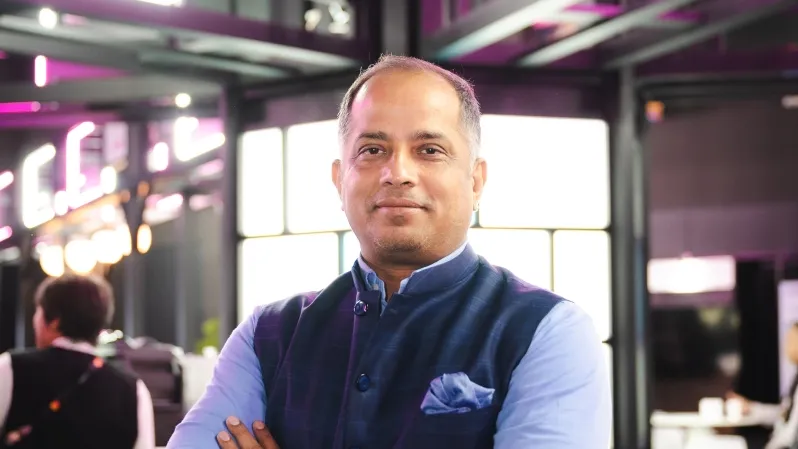
“Japan is strong, developed, well-established with a strong capital base,” Sopnendu Mohanty, group CEO at Global Finance & Technology Network Pte Ltd. (GFTN),” told Asian Banking & Finance. “India is a bedrock for innovation, growth and inclusion. When you bring these together—the institutions, the regulators, the block—they create an interesting corridor.”
Japanese lenders have begun placing large bets. Sumitomo Mitsui Banking Corp. (SMBC) paid about $1.6b for a 20% stake in Yes Bank in May 2025 and added another 4% stake months later. Mitsubishi UFJ Financial Group, Inc. (MUFG), Japan’s biggest bank by assets, is investing $4.3b for a 20% stake in Shriram Finance Ltd., a lender focused on car and small-ticket loans.
The deals underscore how Japanese institutions are using India as a growth outlet at a time when returns at home remain constrained by low interest rates and an ageing population.
For India, the inflows bring balance-sheet strength and credibility at a time when its financial system is expanding to serve millions of borrowers.
GFTN, a Singapore-based platform spun out of the Monetary Authority of Singapore’s fintech initiatives, is working with banks and companies on both sides to structure cooperation across talent, technology, and market access.
Japanese firms have long operated global capability centers in India, but many are now upgrading those units to support core banking, payments and risk functions rather than back-office work.
One pilot, the BharatNetra Initiative in Odisha, focuses on developing fintech talent for digital finance roles.
GFTN has also worked with MUFG and SMBC to bring Indian students to Tokyo and partnered with Odisha’s state government to train almost 190 students through a six-month fintech program administered by the National University of Singapore-the Asian Institute of Digital Finance (NUS-AIDF).
Beyond talent, Japanese banks are working with Indian partners to test practical use cases, particularly for small and medium enterprises.
These include trade finance, supply-chain lending, climate-linked finance, insurance, and digital identity tools.
For Japanese lenders, India provides a live market to test products that can later be adapted elsewhere in Asia.
India’s digital public infrastructure has become a central attraction. Over the past decade, the country has built interoperable rails for identity, payments, and data sharing that let private firms deliver financial services at very low marginal cost.
Mohanty said this has turned India into a reference point for delivering inclusive finance at scale.
Japan’s role, by contrast, is less about speed than credibility. Its banks can underwrite large transactions and support longer-term transformation in emerging markets such as India, the Philippines and Thailand. Its regulators are cautious but willing to engage in new areas, including digital assets and sustainability-linked finance.
The broader goal, Mohanty said, is not regulatory uniformity but workable harmonisation.
“It’s about building trusted bridges between compatible regimes,” he said in a video call. That only works if it’s tied to real use cases in the economy, he pointed out.
“GFTN is putting a bet on Asia first,” Mohanty said. “We believe Asia in the next decade will be the front-runner and flag-bearer of innovation.”





















 Read Here
 Advertise
 Sign Up