APAC dominates financial centre list but growth slows
Eight of 15 centres tipped to rise are based in the region.
Financial centres across Asia-Pacific (APAC) remain amongst the strongest globally, but overall sentiment has weakened, according to the latest Global Financial Centres Index 39 published in March 2026.
According to the Global Financial Centre Index 39th edition by Long Finance, six APAC centres were included in the top 10.
However, the average rating for the region is down 1.27% since the 38th edition released last year.
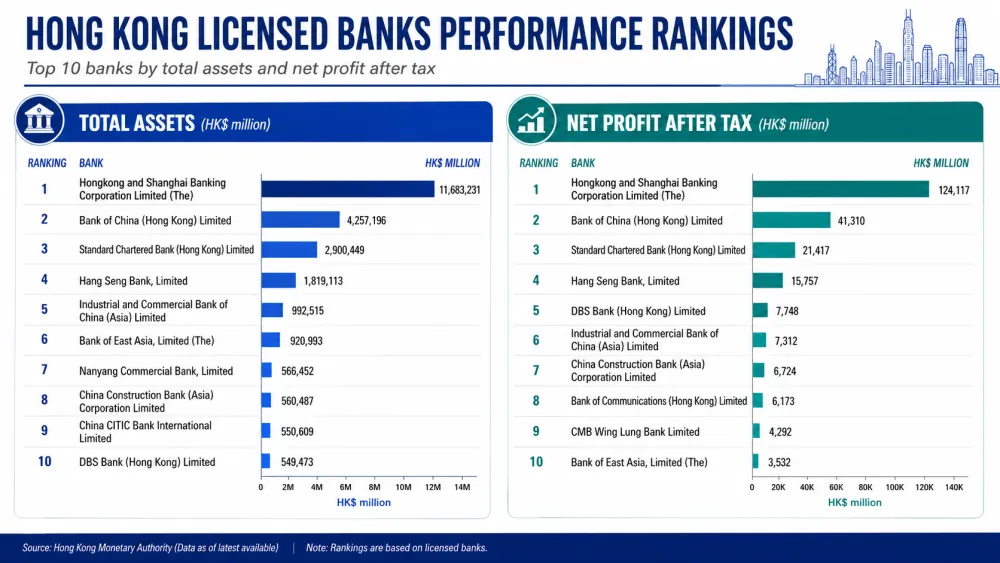
Just three centres in the region saw their ratings increase. Hong Kong holds third place with a rating of 765, followed closely by Singapore in fourth with 764. Shanghai ranks sixth at 743, Seoul eighth at 741, Shenzhen ninth at 740, and Tokyo 10th at 739.
Despite these rankings, performance across the region has softened.
Further down the rankings, several APAC centres showed mixed movement. Osaka rose 10 places to 26th, whilst Kuala Lumpur climbed three places to 42nd.
In contrast, cities such as Melbourne fell seven places to 31st, and Sydney slipped one place to 24th, both recording lower ratings.
The region continues to stand out in terms of overall competitiveness.
The average rating of the top five APAC centres remains slightly higher than comparable figures for North America and Western Europe, indicating continued strength at the top end of the market.
Looking ahead, APAC is expected to play a larger role in global finance.
Eight of the 15 centres identified by industry respondents as likely to grow in importance over the next two to three years are in the region.
In financial technology (fintech), the region also leads. Hong Kong ranks first globally for fintech, followed by Shenzhen in second and Singapore in fourth, highlighting the continued strength of APAC in digital finance and innovation.
However, the report notes that only a small number of APAC centres improved their ratings in this edition, suggesting that whilst the region remains competitive, growth momentum has slowed in the near term.

















 Read Here
 Advertise
 Sign Up