China holds 40% share as fintech competition intensifies
India posts 27% annual growth backed by over 100 billion UPI transactions.
Mobile applications continue to lead the Asia-Pacific financial technology (fintech) market, holding a 72.62% share in 2025, but newer payment interfaces are expanding quickly, according to a Mordor Intelligence report.
Point-of-sale (POS) and Internet of Things (IoT) devices are expected to grow at a compound annual rate of 23.72% through 2031, driven by wider adoption of contactless payment systems.
Merchants are increasingly using integrated terminals that accept QR codes, near-field communication (NFC), and biometric authentication without the need for separate hardware.
In Southeast Asia, small businesses such as Singapore’s hawker stalls and Malaysia’s wet markets are adopting smartphone-based POS systems, whilst Indonesian warung shops use QR codes that connect to multiple payment networks.
Web-based platforms remain important for business transactions, particularly for treasury management and reporting, where desktop interfaces offer functions that mobile apps cannot fully support.
At the same time, IoT-enabled payments through connected cars, wearable devices, and smart appliances are gaining traction, allowing fintech firms to expand across multiple user touchpoints.
China accounts for 40.12% of the regional market in 2025, led by Alipay and WeChat Pay, although regulatory limits on data use and cross-border activity are slowing growth.
India is the fastest-growing market, with a projected 27.25% annual growth rate, supported by more than 100 billion transactions on its Unified Payments Interface and central bank initiatives.
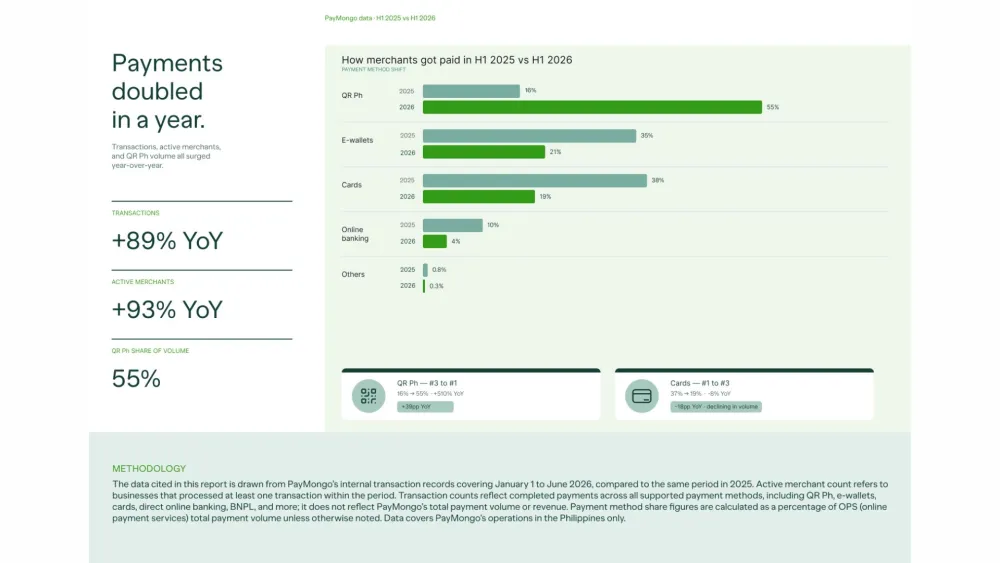
Southeast Asia represents about 25% of activity, with Indonesia driving volume and the Philippines benefiting from strong remittance flows.
The market remains moderately concentrated, with major players competing alongside numerous smaller providers.
Companies are shifting towards embedded finance, cross-border services, and business-focused solutions.
Advances in artificial intelligence, fraud detection, and blockchain are supporting this growth, whilst mergers such as Airwallex’s 2024 acquisition of CTIN Pay highlight ongoing consolidation in the sector.



















 Read Here
 Advertise
 Sign Up