Why APAC cross-border payments lag revenue despite $400b flows
Region delivers 18% of global volume but only 14% of earnings in 2025.
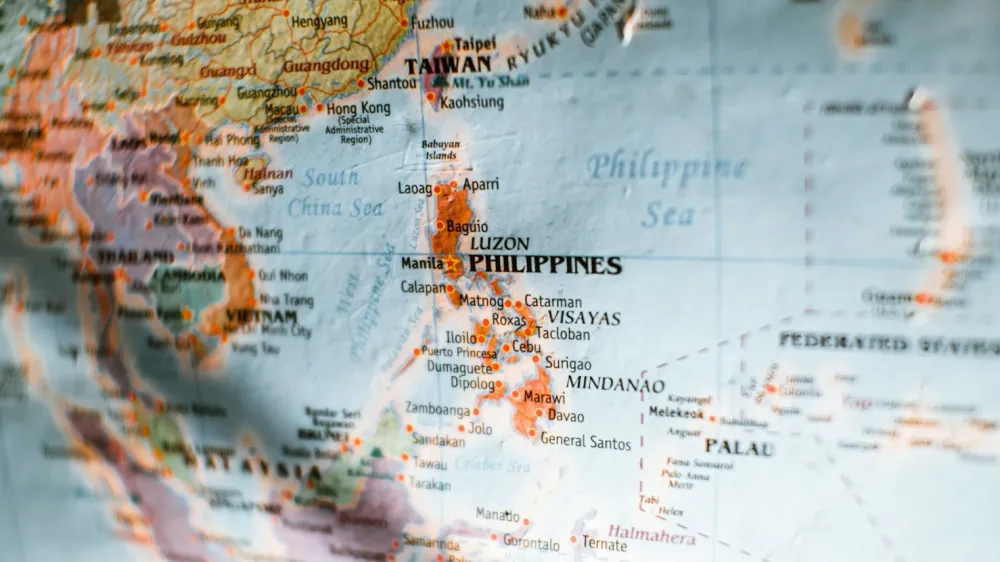
Asia-Pacific (APAC) accounted for $400b in business-to-consumer (B2C) cross-border payment flows in 2025, generating $7.0b in revenue, according to FXC Intelligence.
The region made up 18% of global flows and 14% of revenues, with an average take rate of 1.9%.
Globally, B2C cross-border payments reached a total addressable market of $2.1t in 2025.
The segment is expected to grow to $5t by 2033, reflecting a compound annual growth rate of 11.4%.
This is faster than the 10% CAGR recorded between 2017 and 2025, indicating an acceleration in growth.
B2C cross-border payments cover international payroll for workers, as well as payouts linked to gig economy platforms such as Uber and social media creators.
Growth is being driven by the expansion of the digital economy and rising volumes of gig and creator payouts.
APAC remains smaller than North America and Europe in overall flows. North America led with $0.9t in flows and $30.2b in revenues in 2025, accounting for 42% of global flows and 59% of revenues, with the highest take rate at 3.4%.
Europe followed with $0.7t in flows and $10.9b in revenues, representing 35% of flows and 21% of revenues, but with the lowest take rate at 1.5%.
Together, North America and Europe account for more than 75% of global B2C cross-border payment flows.
Much of North America’s volume comes from the United States, where many global digital platforms that handle mass payouts are based.
Differences in pricing across regions reflect market structure. Europe’s lower take rate is linked to stronger competition, more efficient payment systems and a higher share of intra-regional transactions.
North America, by contrast, has more inter-regional flows, which tend to be priced higher.
Looking ahead, growth in Asia-Pacific is expected to follow global trends, supported by improvements in payment infrastructure, including efforts to reduce friction, standardise messaging through ISO 20022, and shorten settlement times under initiatives such as the G20 roadmap for cross-border payments.
Providers in the space are also competing on services beyond pricing, including faster access to funds, compliance support and payment orchestration.




















 Read Here
 Advertise
 Sign Up