
DeeMoney CEO says trust will beat acquisition
CEO Phlaphongphanich said the industry is measuring the wrong things.
Finance firms in Thailand need to prioritise customer value and unit economics over digital growth metrics, as high acquisition costs can exceed the value of the service and leave transactions unable to cover platform costs.
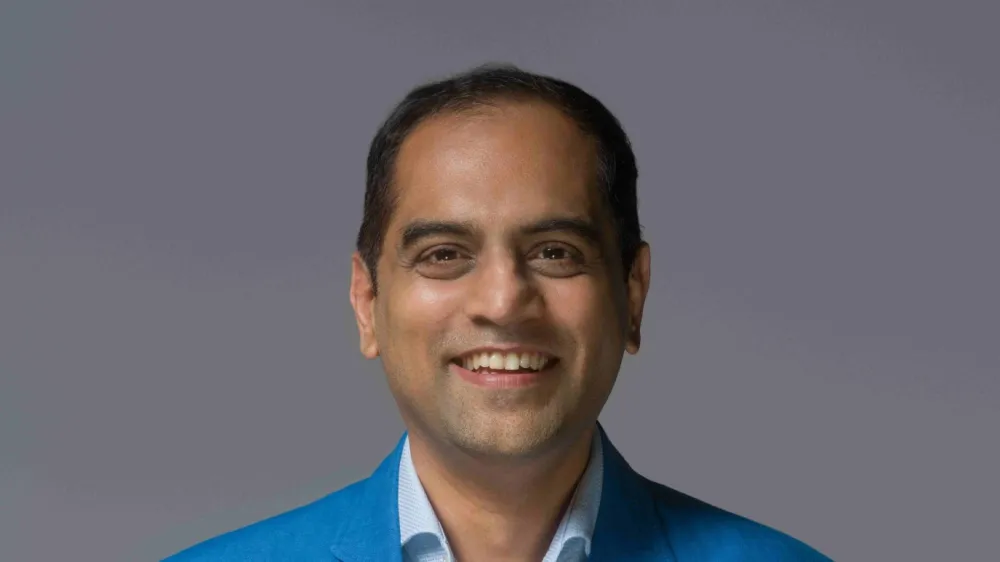
Aswin Phlaphongphanich, Co-Founder and CEO of DeeMoney, shared this perspective at the Asian Banking and Finance and Insurance Asia Summit.
DeeMoney processes four to five million transactions annually, with monthly transaction value exceeding $250m (THB8b).
Speaking at the fireside chat with Tim Charlton, publisher, Phlaphongphanich described how that scale was built.
"We are a non-bank and we are processing around one of the three payments into the country at this point," he said.
Rather than competing directly with banks on customer acquisition, DeeMoney has leaned into embedded finance.
The company integrates its APIs into partner platforms, including fintechs and e-wallets, allowing it to scale without incurring high marketing costs. It now works with more than 80 partners and supports transactions across 150 inbound corridors and 80 outbound markets, touching over 2 million accounts monthly in cross-border transactions.
"We did not have to acquire the customer but they were still able to touch and use our services by embedding our product," Phlaphongphanich explained.
This approach aligns with broader industry trends.
According to a 2025 report by the Bank for International Settlements, cross-border payment costs in emerging Asia remain above 5% on average, significantly higher than the G20 target of 3%.
Embedded fintech models are increasingly seen as a way to compress these costs by bypassing legacy correspondent banking layers.
However, the company's strategy is not built on growth metrics alone.
Phlaphongphanich cautioned against overreliance on traditional digital KPIs such as monthly active users or customer acquisition cost.
"It's a trap. At the end of the day, you want to look at whether you're giving value to the user," he said, noting that some startups spend more acquiring customers than the value generated per transaction.
By offering fees of typically $2 to $5, compared to the 7.5% to 10% often charged by banks for smaller transfers, DeeMoney reduces total transfer costs by 3 to 4%, equating to $9.2m (THB300m) to $12.3m (THB400m) in monthly savings for households and businesses.
Instead, DeeMoney has focused on lifetime value and trust.
"If you've succeeded in making a brand ambassador, you have created this lifetime value where the trust is now beyond the product," he said.
This reflects a broader pivot in fintech toward profitability and sustainable margins, particularly as funding conditions tightened across Asia in 2024 and 2025.
DeeMoney outlined two product initiatives that reflect this philosophy in action.
The first is its Cross-Border QR Payment service, scheduled for launch in the second half of 2026, which will allow foreign tourists in Thailand to pay local merchants directly using their overseas e-wallets or bank accounts by scanning Thai QR codes.
This is expected to reduce dependence on high-fee credit cards and cash exchange, with the company targeting transaction volumes of more than $31m (THB1b) in its first year.
In parallel, DeeMoney is exploring stablecoin integration in collaboration with the Bank of Thailand. By leveraging stablecoins such as USDC for international transfers, the company aims to enable round-the-clock transactions and further lower costs.
Stablecoins are particularly valuable when traditional banking systems are unavailable, Phlaphongphanich said.
The company is also proposing regulatory adjustments to the Bank of Thailand. Current international remittance licences cap corporate transfers at $24,643.1 (THB800,000) per transaction per day, creating hurdles for SMEs managing larger import payments.
DeeMoney is calling for tiered limits based on company size or revenue to better support Thailand's international trade competitiveness.
With global cross-border payment volumes projected by the World Bank to exceed $250t by 2027, the competitive battleground is shifting toward infrastructure efficiency and ecosystem integration.
($1.00 = THB64.93)















 Read Here
 Advertise
 Sign Up