Islamic lenders hit digital wall on slow rollout
Products don’t evolve quickly due to extra layers of review.
Islamic banks don’t lack customers, political support or regulatory backing to go digital. What they lack is speed.
The obstacle isn’t whether Islamic finance can work online, but whether products painstakingly approved by Sharia boards can be adapted, upgraded and scaled once they are digitised—all whilst being measured constantly against conventional banking alternatives.
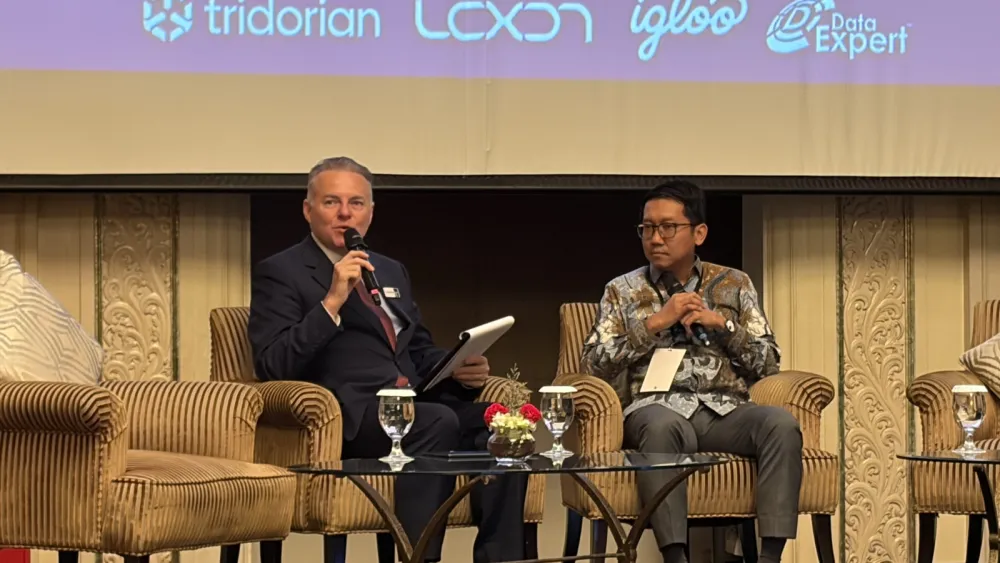
“The easiest way for Islamic banks to digitalise is to take an existing value proposition that’s already been approved by the Sharia board and the regulator, and replicate it into a digital experience,” Mike Breen, chief commercial officer at audax, told Asian Banking & Finance. The challenge comes when you want to change or improve it.
Unlike conventional banking products, Islamic offerings can’t be changed quickly once they’re live. Each change requires multiple layers of governance review, leaving banks with what Breen calls “static implementations”—products that struggle to evolve at the pace demanded by digital consumers.
“There’s no real rinse-and-repeat model,” Breen, who leads go-to-market strategy at the Standard Chartered Plc-backed banking-as-a-service provider, said in a video call. “As a consequence, products don’t evolve very quickly because of these extra layers of governance and review.”
That has real commercial consequences. In markets such as Indonesia, demand for Islamic financial products is strong, but supply isn’t always there. Where offerings don’t exist—or aren’t available digitally—customers simply default to conventional banking.
When Islamic products aren’t available, people move to conventional products instead, Breen said.
Even when Islamic alternatives do exist, they’re often benchmarked against conventional products that benefit from faster digital rollouts and enhancements.
Younger consumers, Breen said, tend to choose “the path of least resistance”—a seamless digital experience over a faith-aligned product that lags technologically.
Audax argues the answer isn’t to rebuild Islamic banking from scratch, but to work around its structural constraints. Its platform lets partner banks, including Maybank Islamic, to digitise existing products whilst layering on services that sit outside the core financial contract.
“Innovation doesn’t have to be just the financial product,” Breen said. “It can be the entire customer experience—lifestyle, journey, value-added services.”
That approach has helped banks digitise Hajj registration through bank accounts, and work on tokenising sukuk to lower investment thresholds. Fractional sukuk could cut minimum investments from about $200,000 to far smaller sums, widening access to Islamic capital markets, he pointed out.
Breen cautions banks against abandoning legacy operations entirely. Instead, he advocates for a “coexistence model,” where digital and nondigital businesses operate at different speeds.
“You don’t want to break what you already have,” he said. “But without safe spaces [for innovation], banks are naturally risk averse. It’s not going to be able to innovate in a meaningful manner.”














 Read Here
 Advertise
 Sign Up